- (937) 404-1040
- Mon - Fri: 8:30am - 5:00pm EST

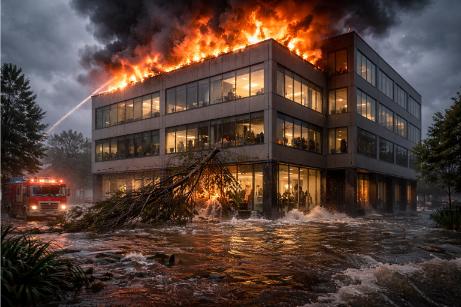
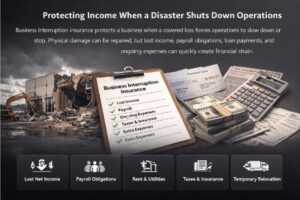
Business Interruption insurance protects a business when a covered loss forces operations to slow down or stop. Physical damage can be repaired, but lost income, payroll obligations, loan payments, and ongoing expenses can quickly create financial strain.
Cogo Insurance structures Business Interruption coverage for businesses of all sizes and industries, including property owners, offices, manufacturers, retailers, restaurants, industrial facilities, and mixed-use operations. Coverage can be included within a property policy or structured as part of a broader insurance program.
Business Interruption insurance replaces lost income and helps pay continuing expenses when a covered property loss disrupts normal operations.
Coverage typically includes:
Coverage applies during the period of restoration, defined as the reasonable time required to repair or replace damaged property.

Most Business Interruption policies include two complementary components.
Replaces income that would have been earned if no loss had occurred. This is critical for businesses with fixed obligations and consistent revenue streams.
Covers additional costs incurred to minimize disruption, such as:
Extra Expense often determines how quickly a business can reopen.
Business Interruption coverage is usually triggered by:
In most cases, there must be direct physical damage to covered property caused by a covered peril.
Business Interruption insurance is commonly used when:
Lost income frequently exceeds the cost of physical repairs.
Many policies include Civil Authority coverage.
This may apply when:
Coverage duration and waiting periods vary and should be reviewed carefully.
Some businesses rely on key suppliers or customers.
Contingent Business Interruption may apply when:
This coverage is especially important for manufacturing, logistics, and retail operations.
Once a covered loss is confirmed, insurers evaluate financial records to calculate lost income and covered expenses.
Payments are based on documented financial performance, policy limits, and the restoration timeline. Proper documentation is critical.
Business Interruption insurance is essential for:
If income is required to meet ongoing obligations, exposure exists.
Many businesses discover gaps only after a loss.
We frequently identify:
Cogo Insurance structures coverage using real financial data and realistic restoration timelines.
Business Interruption coverage requires careful planning.
We focus on protecting cash flow, not just physical assets.
No. It is typically required by lenders, investors, or partnership agreements.
Yes, when tornado or wind is a covered peril under the property policy.
In most cases, yes. Coverage is usually tied to direct physical damage.
Coverage lasts for the defined period of restoration, subject to limits and endorsements.
Yes, if operations are materially impacted by a covered loss.
Yes. We review financials, policy language, and restoration assumptions to align coverage with actual exposure.