- (937) 404-1040
- Mon - Fri: 8:30am - 5:00pm EST

Manufacturing is a core economic engine of Ohio and the broader Midwest. From machining and metal fabrication to plastics, food manufacturing, packaging, automotive suppliers, and light industrial assembly, manufacturers keep supply chains moving and communities employed. With that scale comes a distinct set of risks: high-value equipment, strict customer requirements, product liability exposure, employee safety issues, and costly shutdown scenarios.
Manufacturing Insurance is designed to protect your plant, your equipment, your products, and your ability to keep producing. A well-structured insurance program is not just a compliance item. It is a financial backstop for events that can otherwise wipe out months or years of profit.
Cogo Insurance is an independent insurance agency specializing in commercial and complex risks. We arrange Manufacturing Insurance for small and mid-size manufacturers, contract manufacturers, and supplier businesses. We work with admitted carriers, surplus lines insurers, and specialty MGAs depending on your operations and loss history. We insure manufacturers in Dayton, Cincinnati, Columbus, Chicago, Aurora, Des Plaines, Philadelphia, and across Ohio, Illinois, Pennsylvania, Texas, Florida, North Carolina, Maryland, New Jersey, and New York.
Most manufacturing programs combine multiple policies. The right mix depends on what you make, how you make it, where you ship, and what your customers require.
Commercial Property Insurance protects your physical assets, including:
Common covered causes of loss include fire, wind, theft, vandalism, and certain water losses. Property coverage should be set at realistic replacement cost, not book value. Underinsuring a plant is one of the most common problems we see, especially when equipment has been upgraded over time. If you lease space, you may still have meaningful property exposure for tenant improvements, contents, and contractual responsibilities in your lease.
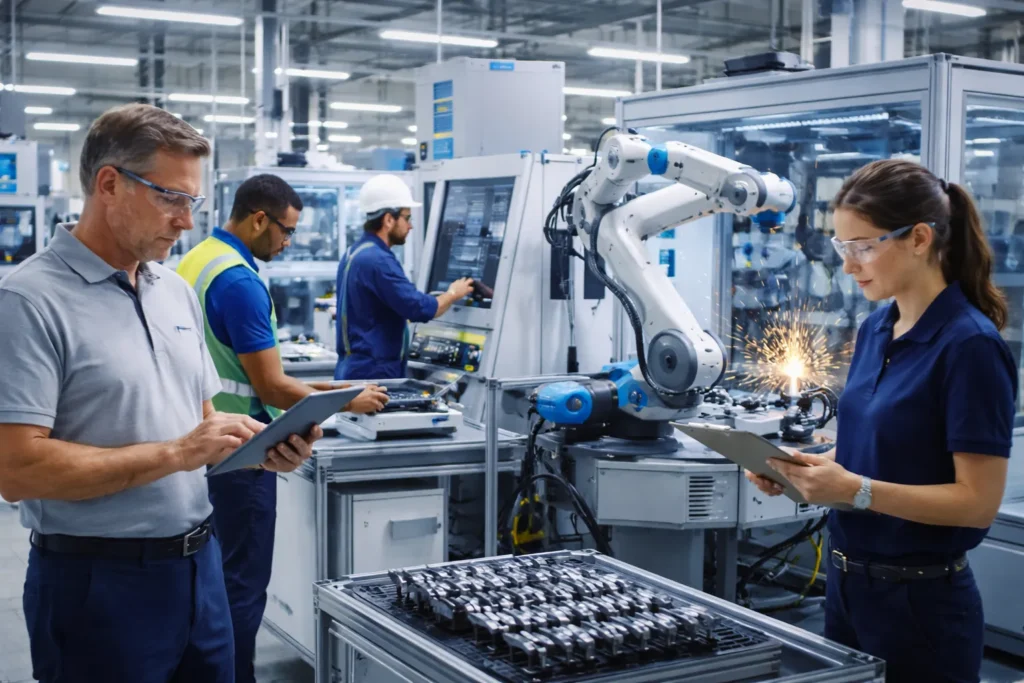
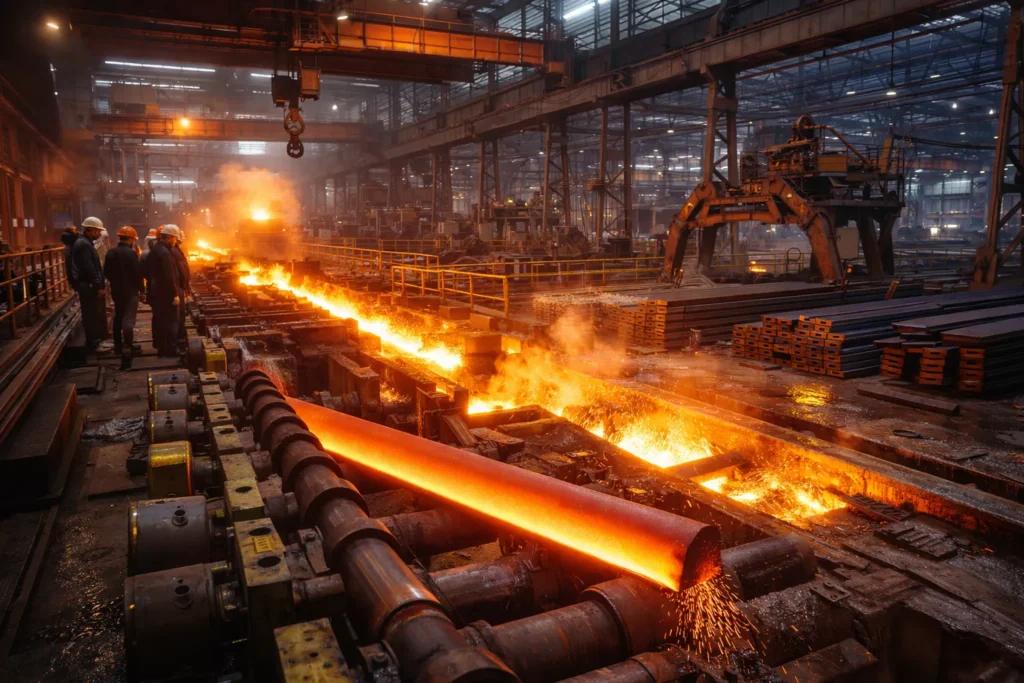
A manufacturing loss is rarely limited to physical damage. The real financial hit often comes from downtime.
Business Interruption coverage can help replace lost income when you cannot operate due to a covered property loss. Extra Expense coverage can help pay for costs you incur to resume operations faster, such as:
For manufacturers that supply automotive, aerospace, medical, or food chains, downtime can also create customer penalties, canceled contracts, or lost shelf space. Those exposures should be discussed up front when structuring limits.
Many of the most disruptive manufacturing losses are not a building fire. They are equipment failure events.
Equipment Breakdown coverage can respond to sudden and accidental breakdown of:
This coverage can also help with business income loss caused by covered breakdown, depending on how it is structured.
Commercial General Liability protects your business from third-party claims such as:
Premises risk includes more than your factory floor. If a vendor, visitor, or driver is injured in your parking lot, at the dock, or on sidewalks you maintain, your company can be pulled into a claim. Many manufacturers have steady traffic from carriers and suppliers, which increases this exposure.
For manufacturers, product liability is one of the most financially severe exposures.
Product liability claims can involve:
Even when your company believes it did nothing wrong, defense costs can be significant. If you sell into larger chains or OEM supply channels, your contracts may require specific liability limits and additional insured language.
If you manufacture components, you can still be brought into claims where the final assembly fails. Coverage should be structured with your supply chain and contractual indemnification obligations in mind.
Manufacturing often involves higher-risk job duties, which can make Workers Compensation one of the most expensive lines for the business.
Workers Compensation pricing is driven by:
A clean safety program and accurate classification matters. Misclassification can trigger premium surprises at audit.
Many manufacturers operate vehicles for:
Commercial Auto covers owned vehicles. Hired and Non-Owned Auto can protect the business if employees use personal vehicles for business or if the business rents vehicles.
Even if you do not own vehicles, Hired and Non-Owned Auto can still matter.
Manufacturers frequently need limits above the standard $1M/$2M GL structure. Reasons include:
Umbrella and Excess Liability policies provide additional limits above your underlying GL, Auto, and sometimes Employers Liability. Limits commonly range from $1M to $10M+, depending on your customer requirements and risk profile.
Manufacturers are increasingly dependent on:
Cyber incidents can shut down production. Cyber Liability coverage can help address breach response, ransomware recovery, business interruption from network events, and third-party claims. If you handle sensitive customer data or have connected operational technology, cyber insurance is worth reviewing.
Manufacturing Insurance should reflect your exact operation. Common segments include:
Different segments have very different risk profiles. We underwrite to your process, not just a label.
Manufacturing premiums typically depend on:
When we quote Manufacturing Insurance, we focus on getting the basics right: accurate values, realistic downtime assumptions, correct classifications, and limits aligned with contracts.
Ohio and the Midwest have a dense concentration of suppliers and manufacturers. Many businesses operate as part of a chain where a single disruption affects multiple downstream customers. That makes downtime and contractual requirements especially important.
Manufacturers here often face:
A manufacturing insurance program should reflect that reality.
Independent access to multiple markets
Experience with complex commercial placements
Ability to place admitted, surplus lines, and MGA programs
Multi-state capability for facilities and operations across state lines
Practical coverage structuring around contracts, downtime, and product exposure
We focus on clear coverage, correct values, and fewer surprises at claim time.
Manufacturing losses tend to be high severity. Fire, equipment breakdown, product liability claims, and shutdown events can quickly become six- or seven-figure problems.
Cogo Insurance structures Manufacturing Insurance programs that can include property, equipment breakdown, business interruption, product liability, workers compensation, commercial auto, cyber liability, and umbrella coverage.
Contact Cogo Insurance using the contact form in the menu to request a quote.
Most manufacturers need Commercial Property, General Liability, Product Liability, Workers Compensation, and often Equipment Breakdown and Business Interruption. Many also need Commercial Auto and Umbrella.
It protects against claims alleging your product caused bodily injury or property damage, including legal defense costs.
GL often includes products and completed operations coverage, but limits and exclusions matter. Manufacturers with higher exposure may need higher limits or specialized structures.
A single equipment failure can halt production even when there is no fire or storm loss. Equipment Breakdown can cover repair costs and related business income loss depending on policy structure.
Property limits should reflect replacement cost to rebuild and replace machinery and contents, not market value or book value.
Many do, especially when contracts require limits above $1M/$2M or when product and premises exposure is higher.
Yes. Cogo Insurance is licensed in multiple states and can structure multi-state programs for facilities, vehicles, and payroll.
Contact Cogo Insurance using the contact form in the menu and provide your locations, operations summary, and any customer insurance requirements.