- (937) 404-1040
- Mon - Fri: 8:30am - 5:00pm EST

Vacant buildings face significantly higher risk than occupied properties. Fires, vandalism, theft, and undetected damage occur more frequently when no one is present. Standard property insurance policies often exclude or severely limit coverage once a building becomes vacant. Vacant Property Insurance protects owners from financial loss while buildings are empty, under renovation, or awaiting sale or lease. Cogo Insurance is an independent insurance agency specializing in commercial and complex risks. We arrange Vacant Property Insurance for property owners, real estate investors, and developers.
We work with admitted carriers, surplus lines insurers, and specialty MGAs to insure vacant buildings across Ohio, Illinois, Pennsylvania, Texas, Florida, North Carolina, Maryland, New Jersey, and New York. We insure vacant properties in Dayton, Cincinnati, Columbus, Chicago, Aurora, Des Plaines, Philadelphia, and other markets where vacant property risk is closely scrutinized by insurers. Vacant Property Insurance protects the structure, protects against liability claims, and protects the owner’s financial position during periods of vacancy.
Most commercial and landlord property insurance policies include vacancy clauses. These clauses restrict or exclude coverage after a building has been vacant for a specific period, typically 60 days.
After this period, insurers may deny claims for:
Vacant buildings experience substantially higher claim frequency. According to insurance industry data, vacant buildings are significantly more likely to suffer fire losses and vandalism than occupied buildings. Vacant Property Insurance restores coverage that would otherwise be excluded.
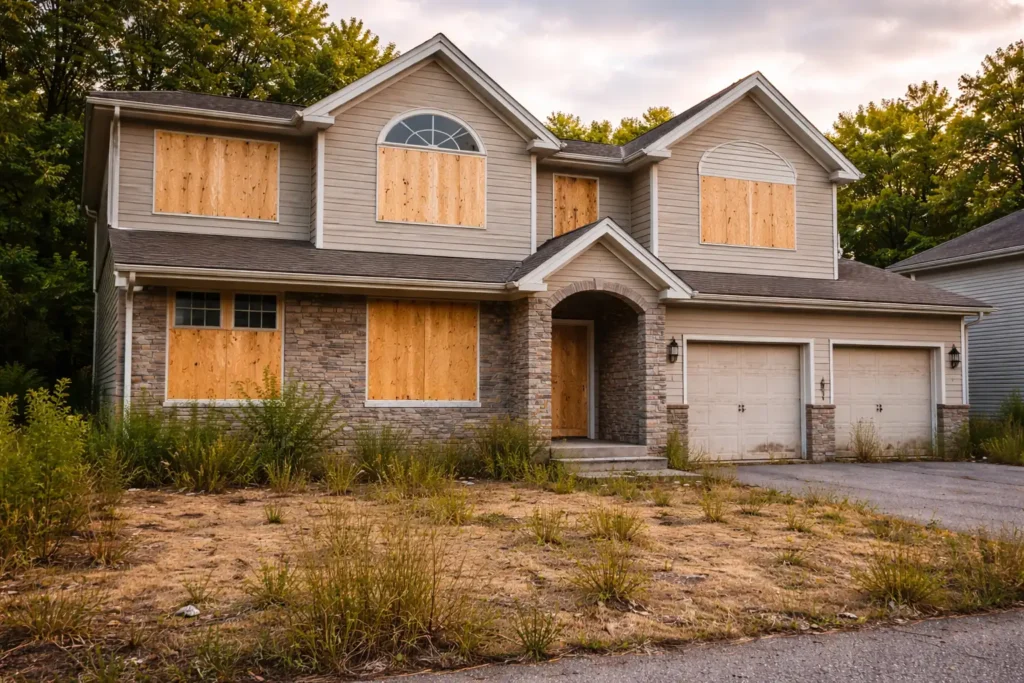
A building is generally considered vacant when most of the usable space is unoccupied and no active business or residential operations are present.
Examples include:
Even partially vacant buildings may require specialized coverage depending on occupancy percentage. Cogo Insurance helps determine when vacant property coverage is necessary.
Vacant Property Insurance protects the physical structure against damage caused by covered events.
Covered risks may include:
Fire is the most severe risk. Vacant buildings often lack active fire detection or suppression, allowing fires to spread undetected. Building coverage protects the owner’s financial investment.
Vacant properties still create liability exposure. Individuals may enter the property and suffer injuries.
Common liability claims include:
Property owners may be held legally responsible for unsafe conditions even if the injured person entered without permission. Liability coverage protects against legal defense costs, settlements, and judgments.
Vacant buildings are frequent targets for vandalism and theft.
Common losses include:
These losses can result in significant repair costs. Vacant Property Insurance restores coverage for vandalism and theft that may be excluded under standard policies.
Vacant Property Insurance can cover buildings undergoing renovation or rehabilitation.
This includes:
Vacant buildings undergoing renovation face elevated risk. Coverage protects the property until renovation is completed and occupancy resumes.
Vacant Property Insurance is necessary for:
Even short periods of vacancy can create exposure. Mortgage lenders frequently require vacant property insurance.
Vacancy occurs in many situations, including:
Property owners in major cities such as Chicago and Philadelphia often experience vacancy during tenant transitions or redevelopment. Vacant Property Insurance protects owners during these periods.
Vacant Property Insurance premiums depend on several factors:
Vacant buildings typically have higher premiums than occupied buildings due to increased risk. Security measures such as alarm systems and inspections may reduce premiums. Cogo Insurance works with multiple carriers to obtain competitive pricing.
Many admitted carriers restrict vacant property coverage. Surplus lines insurers often provide broader coverage for vacant buildings.
Cogo Insurance works with:
This ensures coverage is available regardless of property condition or vacancy duration.
Without proper coverage, property owners face financial exposure from:
Repair costs can reach hundreds of thousands or millions of dollars. Vacant Property Insurance protects the owner’s investment.
Cogo Insurance serves vacant property owners across multiple states, including:
We insure vacant properties in cities including:
Each jurisdiction has different underwriting requirements and risk profiles. We help ensure proper coverage placement.
We work with multiple insurers to provide coverage options.
We specialize in commercial and investment property insurance.
We insure vacant buildings of various types and values.
We serve clients across multiple states.
We ensure coverage meets underwriting and lender requirements.
Vacant buildings face increased risk of fire, vandalism, and liability claims. Standard insurance policies often exclude these risks.
Vacant Property Insurance protects the building and protects the owner from financial loss. Cogo Insurance arranges coverage with admitted insurers, surplus lines carriers, and MGAs. To request a quote, Contact Cogo Insurance using the contact form in the menu.
Vacant Property Insurance protects buildings that are unoccupied against property damage and liability claims.
Most policies restrict coverage after 60 days of vacancy.
Yes, vandalism coverage is typically included.
It may be required by lenders and is necessary to protect against financial loss.
Yes, coverage can include buildings undergoing renovation.
Yes, premiums are higher due to increased risk.
Yes, vacant apartment buildings can be insured.
Contact Cogo Insurance using the contact form to request a quote.